Abhinav Mehta
Student Engineer
I am interested in aerospace engineering, mechanical design, robotics, CAD, prototyping, and experimental research.
I enjoy taking engineering ideas through the full process:
question → CAD → prototype → testing → iteration

Most of what I do starts in CAD and ends on a workbench. I like building physical systems — robotics, mechanisms, sensor-driven electronics — and I spend a lot of time on experimental research, manufacturing, and just seeing whether an idea actually holds up outside of a model.
Featured
Selected work
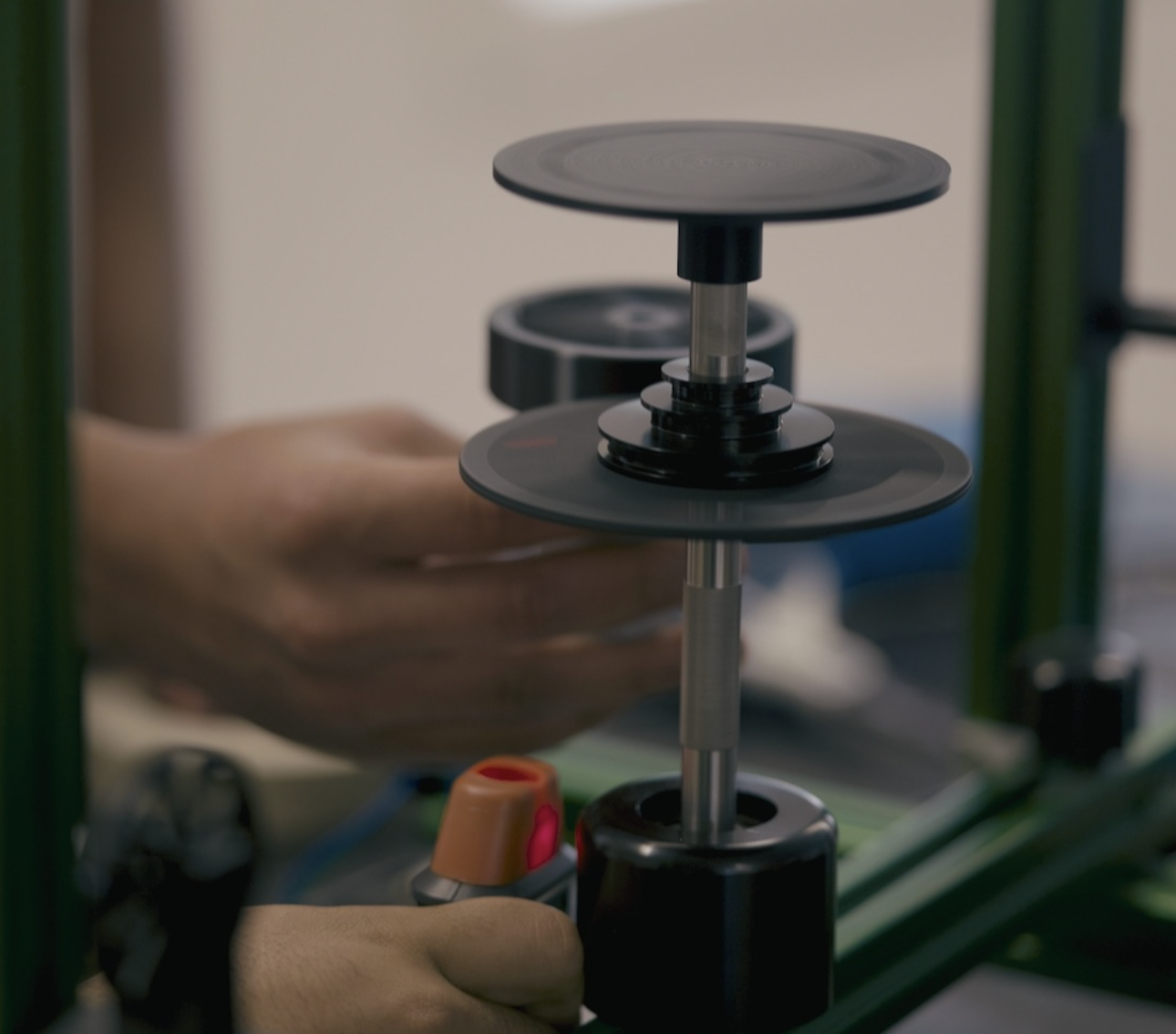 1st Place
Experimental Research
Rotational Damping Research
Designed, 3D printed, and tested seven geometries to investigate how aerodynamic drag influences rotational damping in free-body systems.
View project →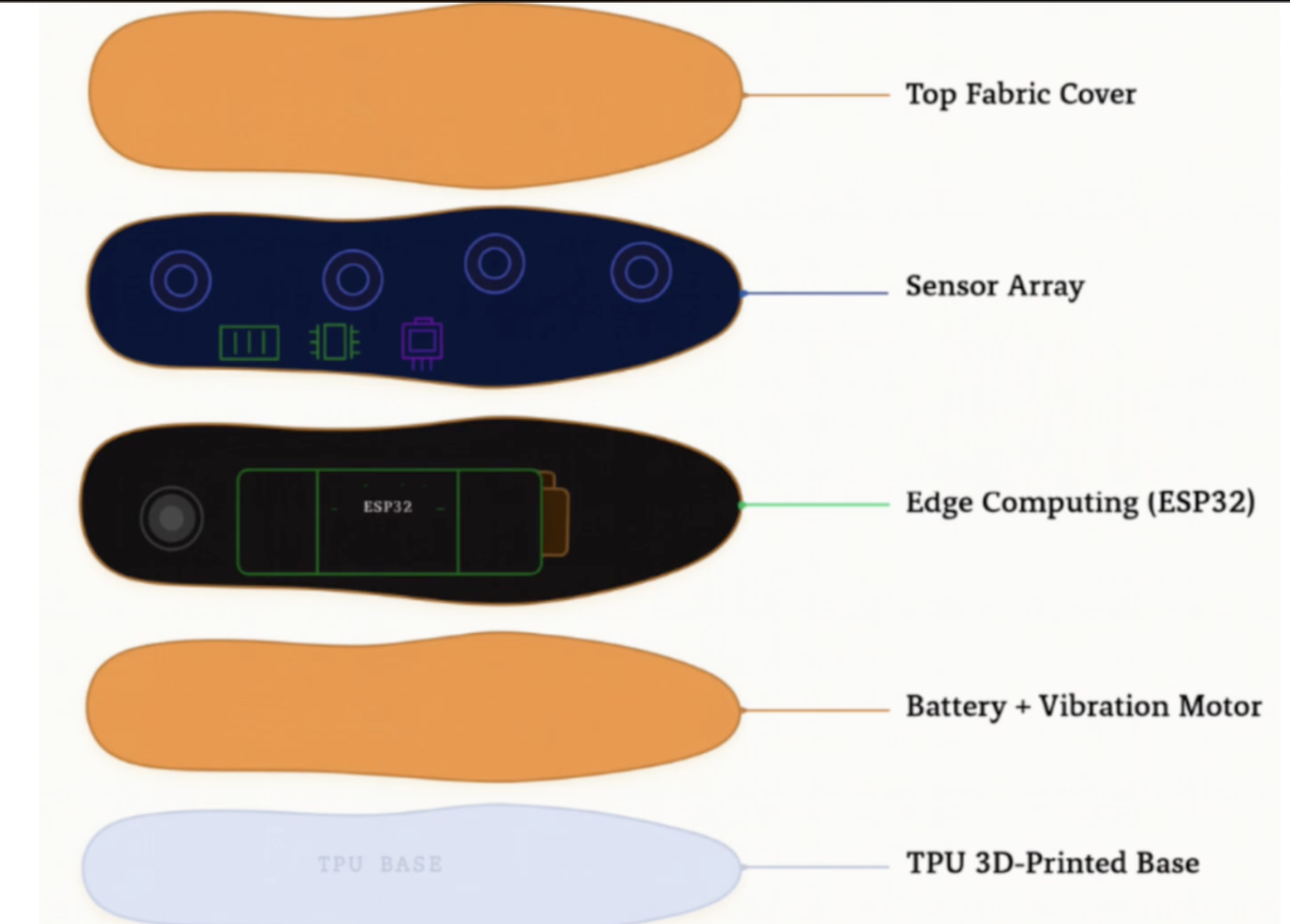
Assistive Technology
NeuroSole
Smart adaptive insole concept combining custom CAD geometry, 3D printing, pressure sensing, and embedded-system design.
View project →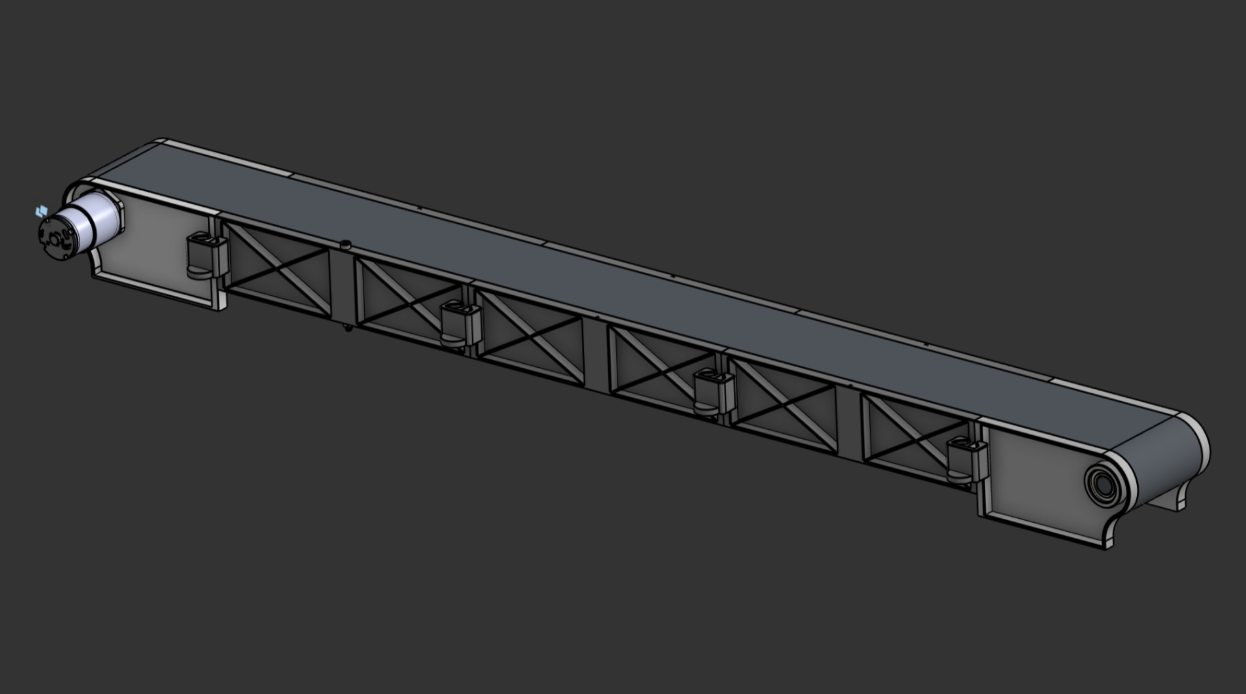
Robotics / Automation
OCC Conveyor System
Designed and built a motorized conveyor to transfer parts between robotic work cells in VCU's Open Cyber City automated manufacturing testbed.
View project →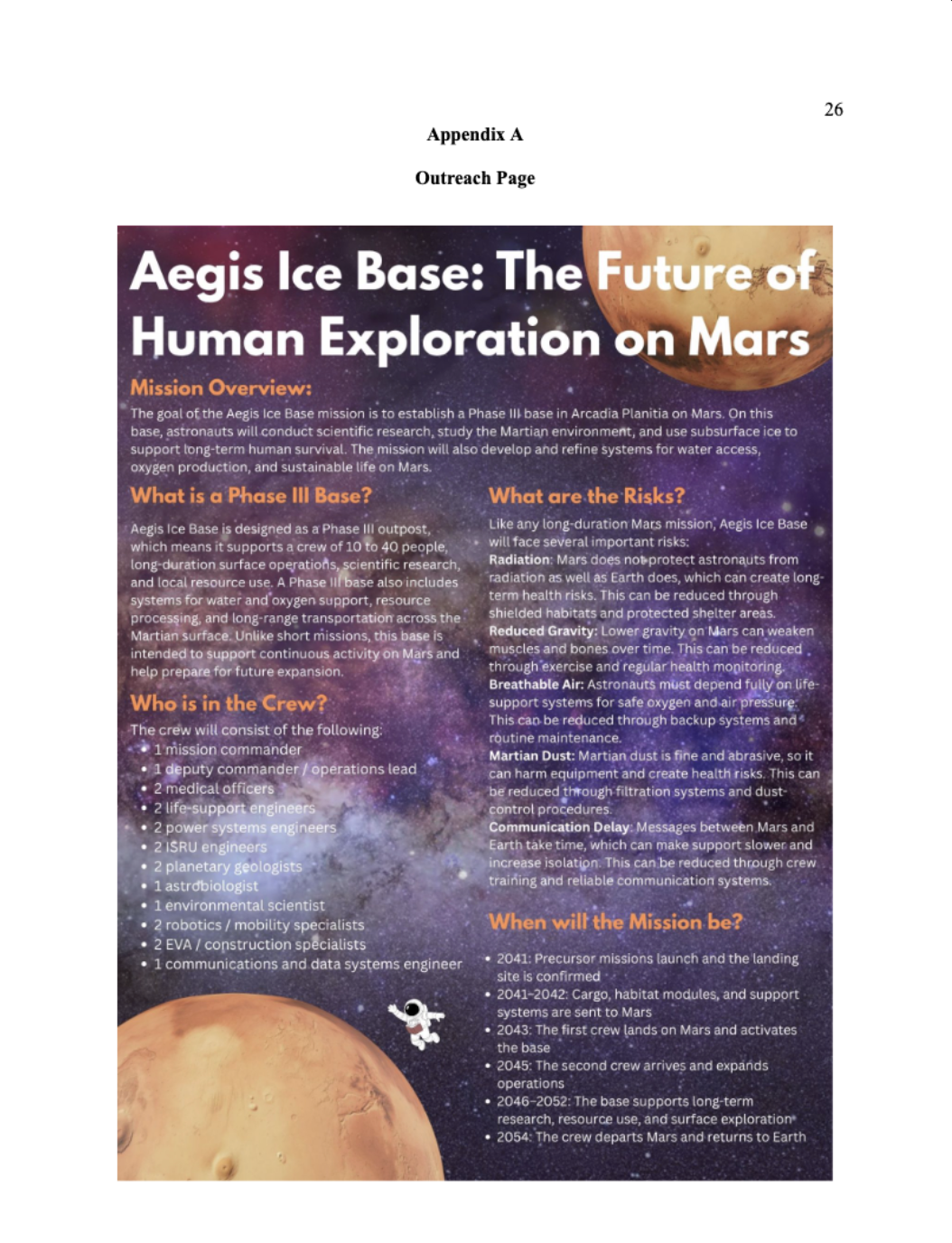
Aerospace Systems
Aegis Ice Base
A 27-page long-duration Mars outpost proposal integrating site selection, life support, power, mobility, ISRU, and risk mitigation.
View project →CAD Archive
Design sketchbook
A running archive of CAD work — mechanical assemblies, competition robotics mechanisms, and manufacturing-style engineering drawings.
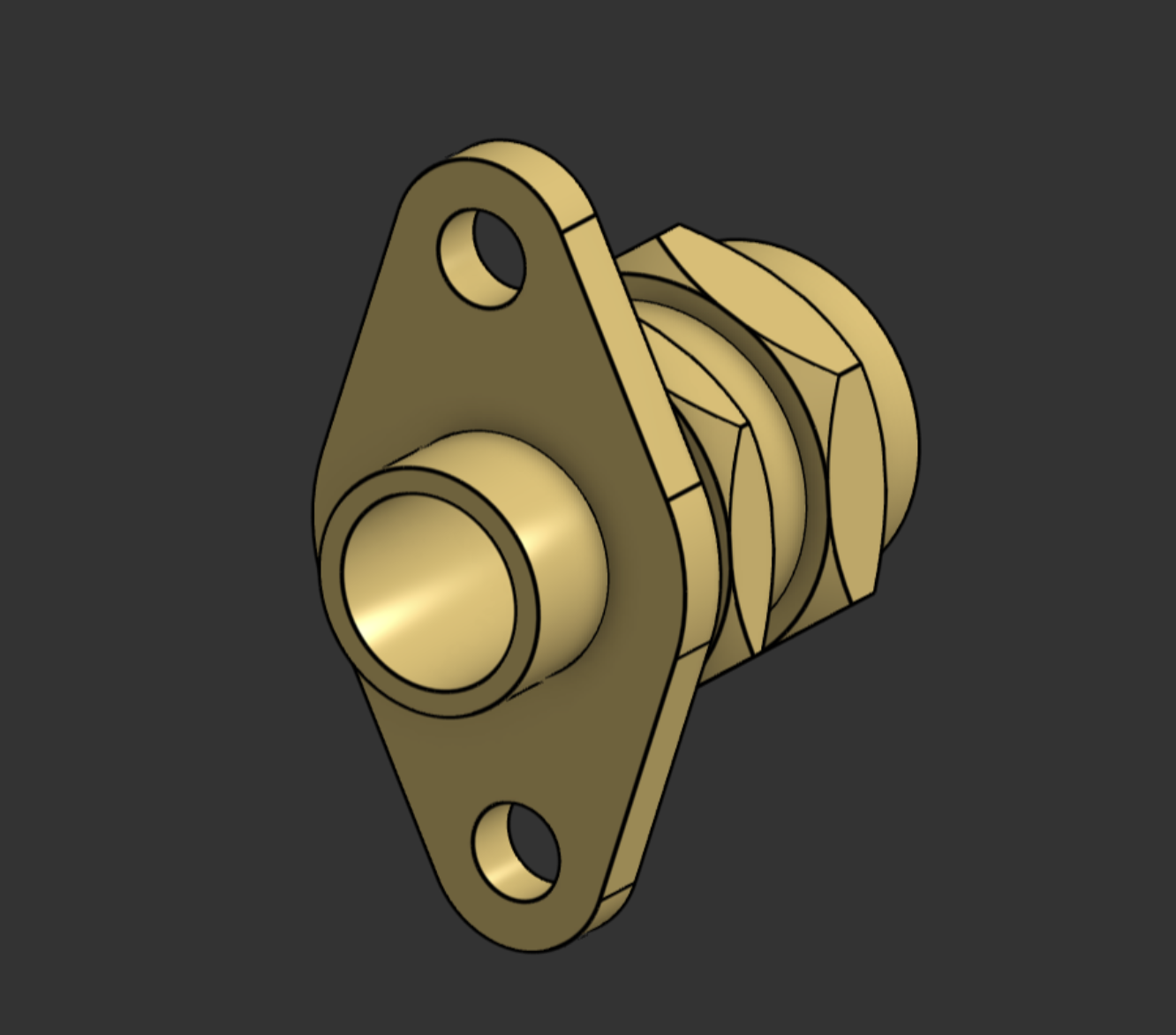
Adjustable Shaft Seal Assembly
Compact threaded shaft-seal mechanism designed for adjustable compression, documented with manufacturing-style drawings and section views.

FRC Rack-and-Pinion Intake
Extendable intake integrating rack-and-pinion deployment, belt-driven rollers, motors, bearings, and structural plates.

FRC Four-Bar Intake
Deployable four-bar intake built around controlled linkage motion, powered rollers, belt routing, and gear reduction.
Builds & Prototypes
Things I've made
Smaller physical builds and interactive prototypes outside of the featured work above.
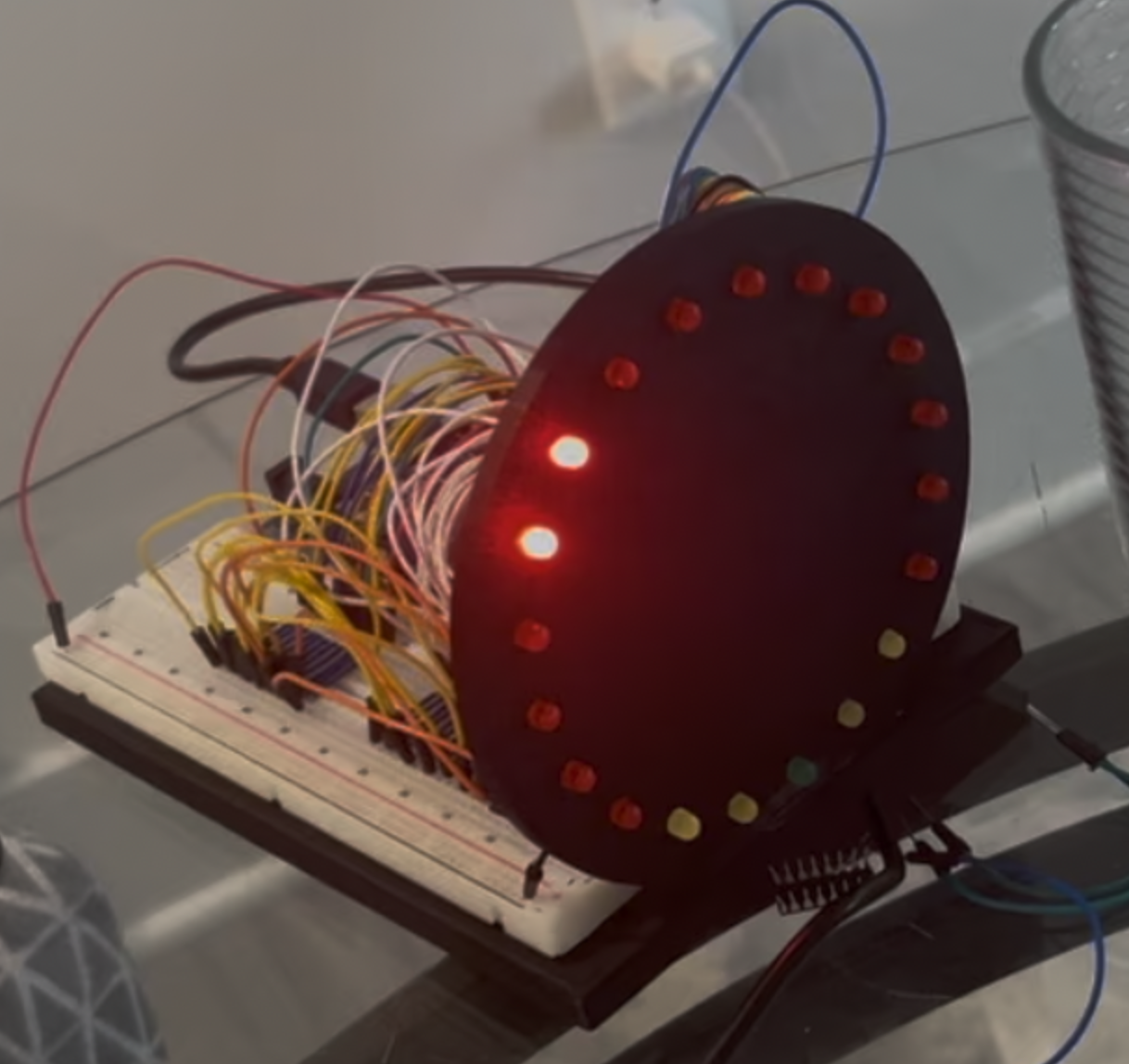
Embedded Systems
Arduino Reaction Wheel
[Add year]
Interactive reaction game combining a custom 3D-printed enclosure, 12 individually controlled LEDs, Arduino programming, and three progressively faster difficulty levels.
View project →Research
Rotational Damping & Geometry
Quantifying Rotational Damping in Free-Body Systems via Geometry-Induced Differential Aerodynamic Drag
With Nathan D'Souza and Ayman Mohammed.
Abstract
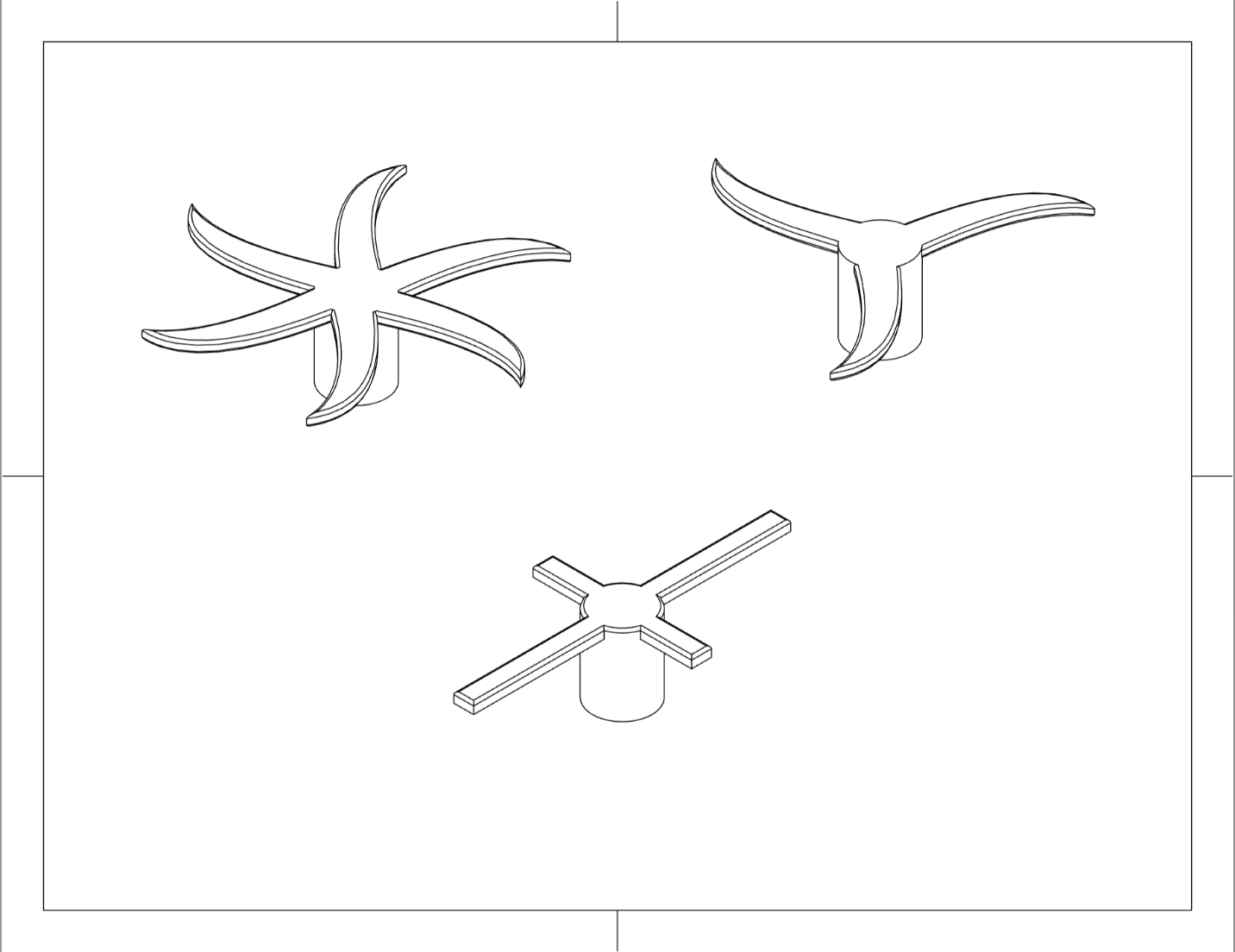
Investigated how geometry-induced aerodynamic drag affects rotational damping in freely rotating systems. Seven geometries were designed and 3D printed, varying blade shape, surface area, and configuration to study how each design influenced the rate of rotational decay. An experimental test setup spun each geometry under controlled conditions, recorded its rotational behavior over time, and compared the resulting decay curves.
Research Focus
How differences in geometry affect aerodynamic resistance and rotational energy dissipation in free-body systems.
Methodology
- Designed seven test geometries in CAD, varying blade shape, surface area, and configuration
- 3D printed each geometry for testing
- Built an experimental setup for controlled rotational testing
- Recorded rotational behavior over time and compared decay curves
- Analyzed how geometry influenced aerodynamic drag and damping
CAD Geometries
Experimental Setup
Each geometry was spun under controlled conditions on a dedicated test rig, with rotational decay recorded and compared across configurations.
Results
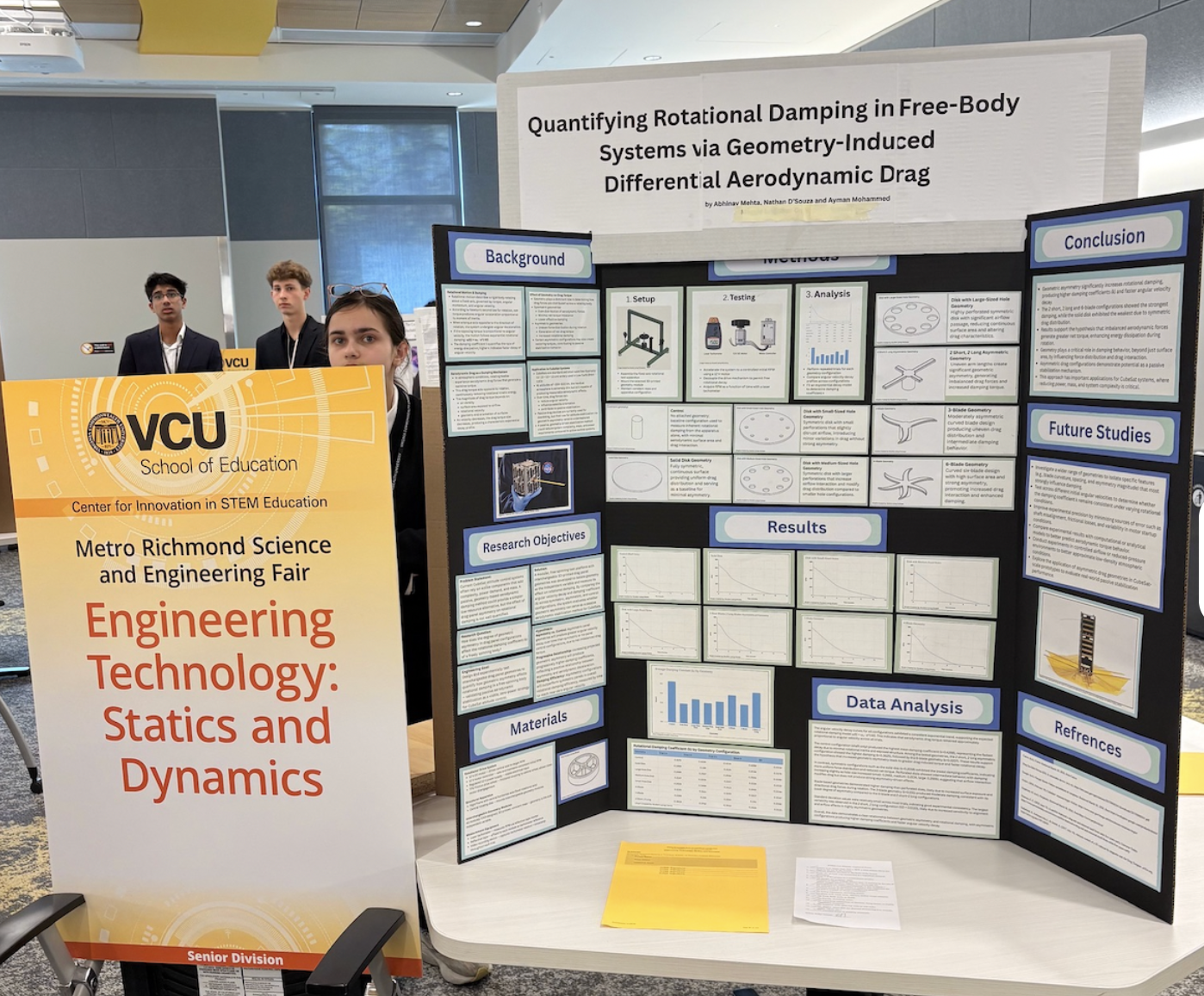
Geometric asymmetry significantly increases rotational damping, producing higher damping coefficients and faster angular velocity decay. The 2-short, 2-long and 6-blade configurations showed the strongest damping, while the solid disk exhibited the weakest due to symmetric drag distribution. These results support the idea that imbalanced aerodynamic forces generate greater net torque, enhancing energy dissipation during rotation — with potential applications for passive stabilization in systems such as CubeSats.
Recognition
1st Place, Engineering Technology: Statics and Dynamics — Metro Richmond Science and Engineering Fair.
Experience
Engineering experience
VCU Open Cyber City Testbed
Engineering Mentorship
Designed and built a motorized conveyor belt system connecting two model manufacturing buildings within VCU's Open Cyber City (OCC) Testbed — a cyber-physical manufacturing environment where robotic arms hand off parts between automated work cells.
View the OCC Conveyor System project →Certification
Credentials

About
About me
I've always been curious about how things are actually built, not just how they work on paper. Most of my projects start with a question and end with a prototype I've broken at least once along the way.
I spend a lot of my time in CAD, moving between mechanical design, robotics, and aerospace-related ideas. I like the process of turning a rough concept into something I can test — 3D printing parts, wiring up sensors, running experiments, and going back to fix what didn't work the first time.
Outside of specific projects, I'm generally interested in manufacturing, experimentation, and finding better ways to move from an idea to a working system.
Skills