Experimental Research
Quantifying Rotational Damping in Free-Body Systems via Geometry-Induced Differential Aerodynamic Drag
Overview
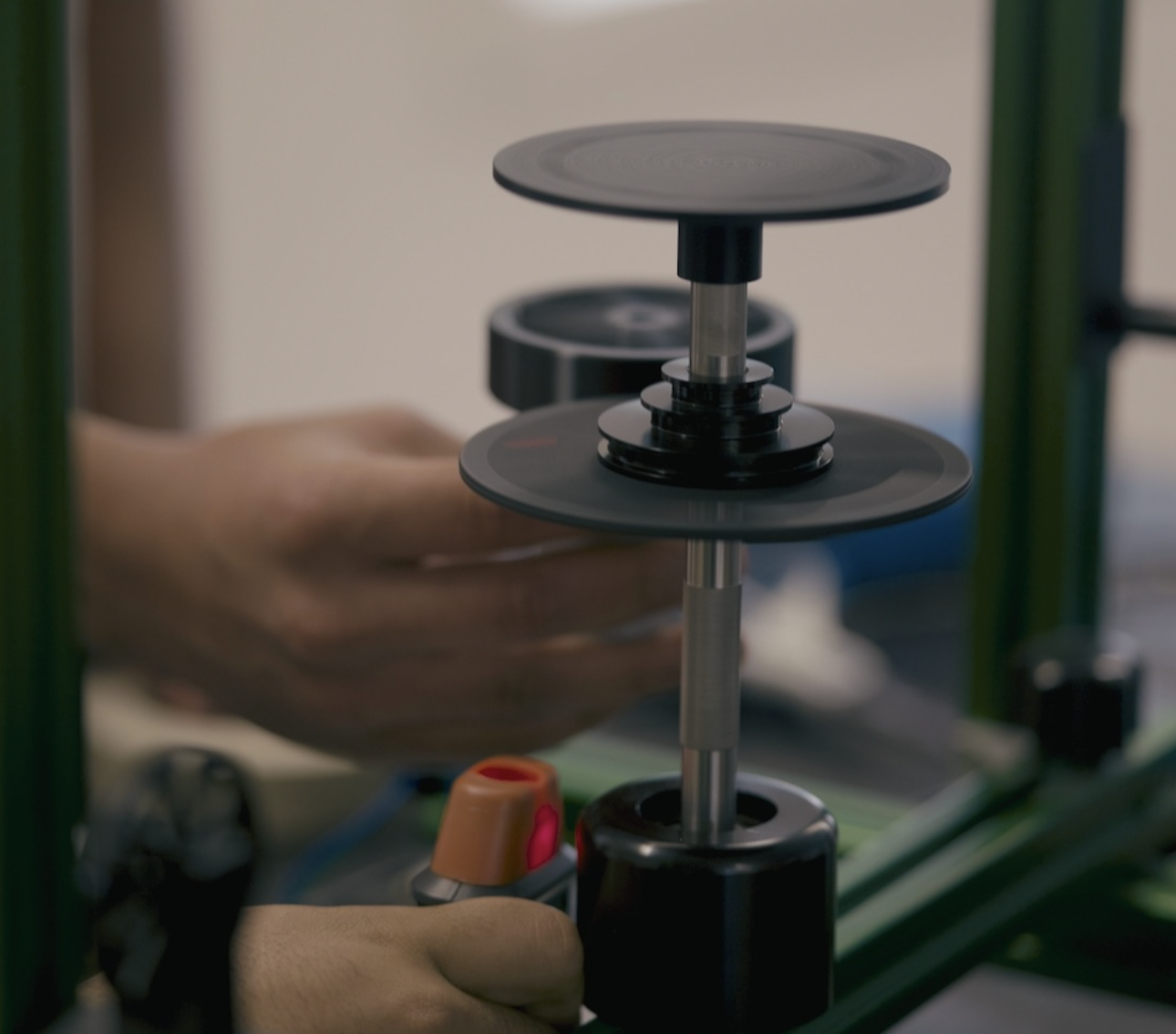
Investigated how geometry-induced aerodynamic drag affects rotational damping in freely rotating systems. I designed and 3D-printed seven different geometries, varying blade shape, surface area, and configuration to study how each design influenced the rate of rotational decay.
I built an experimental test setup to spin each geometry under controlled conditions, recorded its rotational behavior over time, and compared the resulting decay curves. I then analyzed the data to determine how differences in geometry altered aerodynamic resistance and energy dissipation.
The project combined CAD, prototyping, experimental mechanics, aerodynamics, and quantitative data analysis, and earned 1st Place in Engineering Technology: Statics and Dynamics at the Metro Richmond Science and Engineering Fair.
Research Focus
This project explored how differences in geometry affect aerodynamic resistance and rotational energy dissipation in free-body systems.
My Role
This was a team research project, co-researched with Nathan D'Souza and Ayman Mohammed. [Add specific breakdown of individual contributions if desired]
Design Process
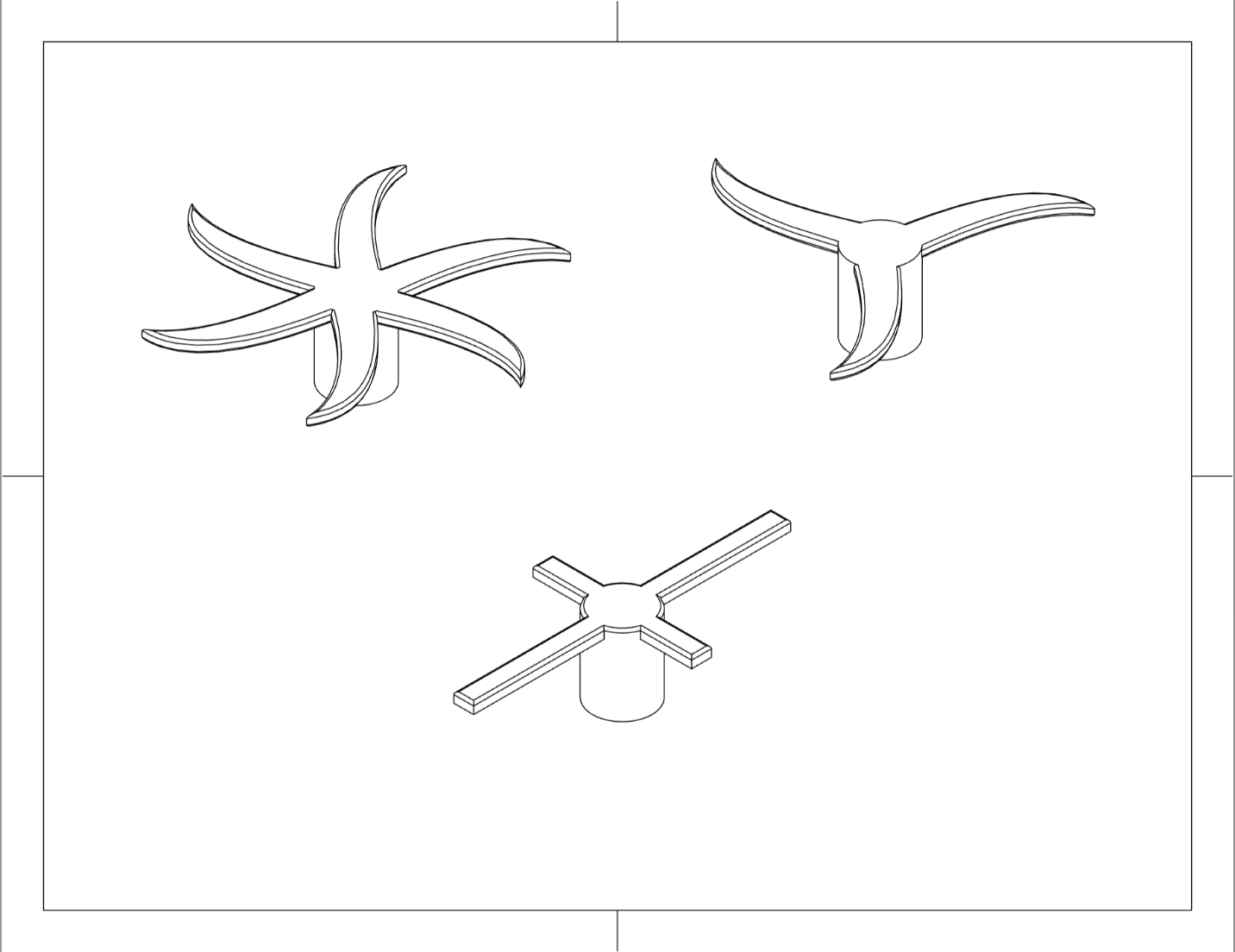
Seven test geometries were designed in CAD, varying blade shape, surface area, and configuration:
CAD / Engineering
Each geometry was modeled in CAD to isolate specific variables — surface area, symmetry, and blade count — before being sent to the printer.
Prototype
Each of the seven geometries was 3D printed for experimental testing.
- Seven geometries, 3D printed for consistency across trials
- Variables isolated: blade shape, surface area, configuration/symmetry
Testing
Built an experimental setup to spin each geometry under controlled conditions, recording rotational behavior over time and comparing decay curves across designs.
Results
Geometric asymmetry significantly increases rotational damping, producing higher damping coefficients and faster angular velocity decay. The 2-short, 2-long and 6-blade configurations showed the strongest damping, while the solid disk exhibited the weakest due to symmetric drag distribution. These results support the idea that imbalanced aerodynamic forces generate greater net torque, enhancing energy dissipation during rotation — with potential applications for passive stabilization in systems such as CubeSats.
Challenges
[Add challenges encountered in geometry design, printing consistency, or measurement]
What I Learned
[Add personal takeaways from this research]
Recognition
1st Place, Engineering Technology: Statics and Dynamics — Metro Richmond Science and Engineering Fair.